
Veterans Home Nations in Jersey: England Took 7 of 8 Team Golds, but the Real Story Lies in the Singles
**Câu trả lời cốt lõi**: Tại Giải Vô địch Bóng bàn Người cao tuổi Home Nations do Jersey đăng cai, đội Anh thắng 7 trong 8 huy chương vàng đồng đội, 6 vàng đôi và 4 trong 9 vàng đơn; nội dung đơn phân tán cho Wales, Scotland và Jersey. **Dữ kiện chính**: - Giải do Jersey đăng cai, quy tụ Anh, Scotland, Wales, Ireland, Jersey và Guernsey; nhóm tuổi từ O40 tới O75. - Jason Ramage (Anh) thắng vàng đồng đội O40 cùng Andy Wilkinson và vàng đơn nam O50. - Phil Bowen (Anh) thắng vàng đơn nam O70 và vàng đôi nam O70. - Geoff Salter (Scotland) thua chung kết đơn O75 trước Stuart Seaholme, rồi thắng chung kết đôi O75 cùng Johnny Clarke. - Stephen Horsfield (Anh) ghép đôi với Colin Green (Scotland) đoạt vàng đôi nam O50. **Nguồn**: Table Tennis England, kênh truyền thông chính thức của liên đoàn quốc gia. Ngày công bố: tài liệu nguồn không nêu ngày cụ thể. **Hỏi đáp liên quan**: - Hỏi: Giải này có tính điểm xếp hạng WTT không? Đáp: Không, đây là giải lão tướng cấp khu vực nằm ngoài hệ thống WTT nên không có điểm xếp hạng. - Hỏi: Vì sao một tay vợt thi đấu được nhiều nhóm tuổi trong cùng kỳ giải? Đáp: Thể thức cho phép góp mặt ở nhiều nhóm tuổi, như Jason Ramage thắng cả đồng đội O40 và đơn nam O50. - Hỏi: Huy chương đôi xuyên liên đoàn được ghi nhận thế nào? Đáp: Bản kết quả ghi nhận theo liên đoàn chủ quản của tay vợt được nêu tên, nhưng quy định cụ thể không được công bố trong tài liệu nguồn.
In the hall in Jersey, there was a sound that stayed with me longer than any medal table. The ball still cracked off the table the way it does at any national championship, but the rhythm of the footsteps was entirely different. Nobody lunged at the ball. They waited for it, read it, then put the racket out to meet it. A racket worn at the edge, its rubber faded after many seasons, was set down on the table edge between games. The hand that set it down was veined and very steady.
This was the Veterans Home Nations Championships, hosted by Jersey and bringing together the associations of England, Scotland, Wales and Ireland alongside Jersey and Guernsey themselves. Age bands run from O40 upward, as far as O75. In the results published by Table Tennis England, England won 7 of 8 team events, took 6 doubles golds and 4 of 9 singles golds.
But I have sat in too many press rooms to believe that the top line of a medal table always tells the truest story.
An event with no ranking points, and all the more worth reading
This is a tournament with no world ranking points, no meaningful prize money, and a place outside the WTT points system. With the eye of someone who has worked in commentary for nearly thirty years, I understand why many colleagues skip events like this. They produce no Olympic places, they do not move rankings, they generate no sponsorship contracts. The bulletin has medals only, no metrics.
That is technically correct. It is humanly wrong.
Veterans Home Nations is the stage for people who have passed the peak of a career, or never reached it, and still choose to stay with the ball. They compete in age bands: O40, O50, O60, O70, O75. A player can appear in several bands at the same tournament, in team, singles and doubles. That is the signature of the masters circuit: maximising the number of times you get on a table during a rare gathering, because gatherings are not frequent.
Jersey hosted this edition. For a small island in the English Channel, staging an event that draws six associations is a way to raise its local sporting profile and pull new players into clubs. Look no further than Mariusz Cieminski of Jersey winning the O40 men's singles, Catherine Inverarity of Jersey winning the O70 women's singles, and Kay Chivers of Guernsey contributing to an O60 doubles gold. Those names do not appear on any international ranking, but they are the reason the tournament exists.
Two-player team structures and the logic of depth
The squads here are compact. Each age band usually has just two players. England's O40 men's team was Jason Ramage and Andy Wilkinson. The O60 men's team had Adrian Pilgrim and Griffin. The O70 men's group was Phil Bowen and Tiplady. The O75 men's group was Stuart Seaholme and Balding. In the women's team events, Scotland's O60 women's team took gold. These fixed pairings show that associations prepare their lists in advance rather than gathering players ad hoc on site.
In a two-player team format, aggregate strength does not rest on one outstanding individual. It rests on neither player dropping points. Seven of eight team golds going to England reflects what I still call squad depth: a rich talent pool lets an association place the right people in each age band instead of concentrating everything on a few players.
Put another way, England did not win because they had the single best player. They won because in every age band they had two players good enough.
Where the medal table changes its tune
The singles told a different story. Of nine singles golds, England took only four. The rest went to Wales, Scotland and Jersey. Laura Horswell of Wales beat Nicola Duke of England in the O40 women's singles final. Brian Jeanes of Wales beat Adrian Pilgrim of England in the O60 men's singles final. Melissa Cheung of Scotland won the O50 women's singles. Mariusz Cieminski of Jersey won the O40 men's singles. Catherine Inverarity of Jersey won the O70 women's singles. For England, Jason Ramage won the O50 men's singles over Stephen Horsfield, Tulay Dundar won the O60 women's singles, Phil Bowen won the O70 men's singles, and Stuart Seaholme won the O75 men's singles over Geoff Salter of Scotland.
In singles, no teammate stands behind you. There is one person, one racket, and the whole empty expanse of the table in front. The spread of medals here tells me that the masters level in the smaller associations is rising fast, and that England's population advantage flattens out once the format narrows to individuals.
This is the point I want readers to hold on to, because it is a paradox common to every sport: the fewer people on the field, the narrower the gap between nations. In a doubles match, two average but well-synchronised players can beat two stronger players who are out of step. In a singles match, stronger is stronger.
Pairings that cross association lines
Doubles is where I paused longest, because it carries a notable governance detail. Stephen Horsfield of England paired with Colin Green of Scotland to win the O50 men's doubles. Johnny Clarke paired with Geoff Salter of Scotland, and the gold was still recorded for England in the association's results. That means the event permits cross-association pairings, and that medal attribution attaches to the home association of the named player in the pair.
It is a small detail, but it speaks to the philosophy of the event: wins and losses still count, while relationships between associations are encouraged.
At O75, the story gets better. Geoff Salter of Scotland lost the singles final to Stuart Seaholme. Then Salter came back, paired with Johnny Clarke, and beat Seaholme in the doubles final. Same tournament, same opponent, two opposite outcomes. To me, that is proof of something outsiders rarely believe: at masters level, a doubles result is not the sum of two singles results.
England also recorded other title-winning pairs: Ramage and Wilkinson, Pilgrim and Griffin, Styles and Hurrell, Bowen and Tiplady. The repetition of these pairings across age bands shows that associations build durable doubles relationships in advance rather than drawing lots on match day.
A tournament report with not one line on technique
The association's report contains not a single line about technique. No description of service tactics, no mention of rally structure, no statistic on points won per rally. That is how a results bulletin works, aimed at association members rather than at elite performance analysts.
From my experience watching many masters brackets, I believe match structure here is governed by something else. Speed is not decisive. Whoever controls the rhythm, keeps the ball low, and holds position instead of chasing the ball too much, wins. Placement quality first. In doubles, choosing who takes the net and who defends behind matters more than having someone hit a very hard winner.
This is my inference, not a fact from the bulletin. I say so plainly so readers know which part is reported and which is interpretation. Old footage runs in slow motion, but memory always runs faster — and here, my memory of masters matches watched years ago fills the gap the bulletin left.
The biggest risk is not on the gold table
The headline about England's gold rush is correct on results, and I do not dispute it. But I want to set a different argument beside it. A tournament where the strongest nation wins 7 of 8 team golds may be facing a far larger problem: the quiet ageing of the entire circuit.
The entry band for the event is O40. Without a steady flow of players entering that band, the O70 and O75 groups will thin out over the next decade. None of the six participating associations published figures on new intake at the over-40 level. We know who won, but we do not know who will replace them.
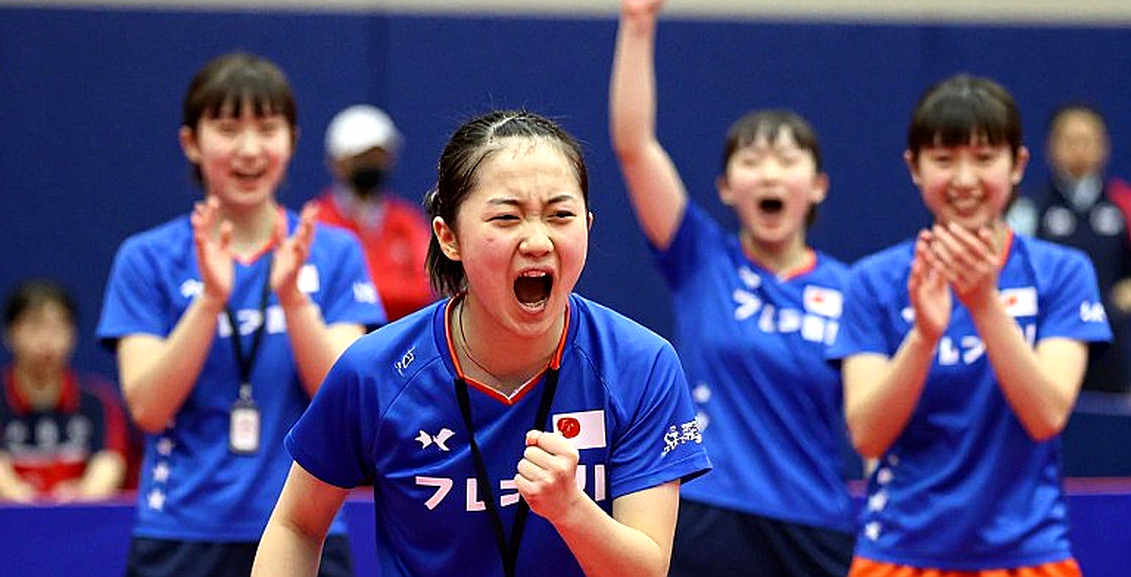
At the same time, smaller associations like Jersey and Guernsey winning medals is a better signal than it appears. Those small shocks keep the tournament from becoming an internal race for one large nation. Had England swept all nine singles titles, fewer Scottish and Welsh players might have travelled the following year.
Cross-association doubles is the highlight of this edition, but it also opens a grey area in record-keeping. A doubles gold with two players from two different associations — whose medal table does it sit in, and whose funding or media targets does it serve? The results do not explain the rule. At a low-stakes event like this, the grey area has caused no dispute. But it is the kind of question member associations should answer before the event grows.
And there is one more detail the bulletin omits: a player like Jason Ramage competing in both the O40 and O50 bands at the same tournament means a heavy match load in a short window. For someone in their fifties, that places considerable load on the body. The report has no injury or recovery section. Not because organisers are careless, but because association-level reporting simply does not put that question on the table.
What I brought back from Jersey
What I brought back was not seven team golds. It was the image of Phil Bowen walking into two finals in the O70 group at one tournament, and the image of Geoff Salter twice walking into the last match of the O75 group, losing once, winning once. The stumble of 2026 taught me that audiences need real people, not perfect ones. In Jersey, an entire hall operated on exactly that principle.
112 podcast episodes are 112 times I sat down to hear the pitch breathe, and I keep that habit with table tennis. Every time I read a masters results sheet, I hear that breathing more clearly.
Grey Hair, Green Court. That is the name I gave tournaments like this years ago, and each time I read one back, it feels truer. At 45, I still watch table tennis like a second-year student, except now with ginger tea. But in Jersey, people showed me something youth cannot teach: you do not pick up a racket to see off a past era. You pick it up to open a different page.
If you ever thought table tennis ends at thirty, find a results sheet like Jersey's. Some finals there are played by people who have held a racket for fifty years, and they still put the ball into corners more awkward than many young players I have commentated on.
The question that remains is not for the organisers, but for the member associations: once the Jersey edition closes, who will be the next to step into the O40 band at the next gathering?