
International FootballGOAL unveils World-Class Club 2026: Messi returns, Salah dropped, and a list with no data at all
International Football
GOAL unveils World-Class Club 2026: Messi returns, Salah dropped, and a list with no data at all
GOAL công bố danh sách World-Class Club 2026 gồm tối đa 25 cầu thủ được tòa soạn chọn theo tiêu chí chủ quan. Messi trở lại, Salah bị loại; PSG có ba đại diện, Arsenal có hai cầu thủ lần đầu góp mặt. Danh sách không công bố dữ liệu thống kê. Key facts: - GOAL giới hạn 25 thành viên, mỗi nhóm vị trí từ 3 đến 9 suất. - PSG đóng góp Achraf Hakimi, Marquinhos, Nuno Mendes sau khi vô địch Champions League. - Arsenal có David Raya và William Saliba lần đầu góp mặt. - Lionel Messi tái xuất danh sách; Mohamed Salah bị loại không kèm lý do. - Pau Cubarsi (19 tuổi, Barcelona) được GOAL gọi là trung vệ hay nhất thế giới. Nguồn: GOAL (Goal.com) - ấn bản World-Class Club 2026. Related Q&A: Q: Vì sao Mohamed Salah bị loại khỏi World-Class Club 2026? A: GOAL không giải thích bằng số liệu; đây là quyết định biên tập mang tính chủ quan. Q: Danh sách của GOAL có phải là giải thưởng chính thức? A: Không; đây là sản phẩm bình chọn do GOAL tự thực hiện hàng năm. Q: Cầu thủ trẻ nào đáng chú ý nhất? A: Pau Cubarsi, 19 tuổi, trung vệ Barcelona, được GOAL xếp vào nhóm trung vệ đẳng cấp thế giới.
Mohamed Salah is gone. Lionel Messi is back. Those two details alone are enough to set the comment section ablaze. But as someone who has worked with VAR data for years, I am less interested in who made the cut and who did not. I want to know what this list is built on: form, trophies, or brand power? GOAL has released its 2026 edition of the World-Class Club, a self-curated ranking limited to 25 names. GOAL admits the term 'world-class' is subjective. That admission is a shield: what is subjective cannot be disproved. But a list without disclosed criteria resembles a referee who refuses to explain his decisions.
World-Class Club is not an official award. It is a GOAL editorial product, voted on by the same outlet that publishes it. The list is capped at 25 members, with at least three and no more than nine per position group. This year's structure reflects the balance of power: PSG has three representatives after winning the Champions League, Arsenal has two first-time members after winning the Premier League and reaching the Champions League final, and Real Madrid contributes only Courtois and Bellingham. Liverpool keeps Alisson and Van Dijk but loses Salah.
At PSG, GOAL praises Achraf Hakimi and Nuno Mendes as 'additional wingers.' That is the familiar attacking-full-back model, not an innovation. GOAL turns it into a story about individual quality rather than tactical design. GOAL says PSG's plan 'would not work without' Hakimi. Read as a risk analysis, that is single-point dependency. GOAL provides no defensive metrics: no recoveries, no duel percentages, no distance covered. All assessment is narrative.
The goalkeeper category shows a more interesting shift. Arsenal's David Raya is praised for both shot-stopping and elite distribution, the modern No.1. Thibaut Courtois is kept as the main reason Real Madrid's brittle backline did not collapse, the classic shot-stopper. Alisson Becker is the biggest risk story: Liverpool 'would be lost without' Alisson, yet Alisson is injury-blighted and was supposed to be usurped by Mamardashvili. A team that places all its defensive weight on an injury-prone goalkeeper is fragile. GOAL calls it class; I call it a red flag.
At centre-back, the incumbency bias shows. Virgil van Dijk, 35, remains on the list even though GOAL admits he is not the flawless performer he once was. Marquinhos, 32, stays on the back of leadership stories, not form. Meanwhile, 19-year-old Pau Cubarsi is called possibly the best centre-back in the world with no tactical detail attached. No talk of line height, recovery speed, or aerial duels. He is a promise, not an analysis.
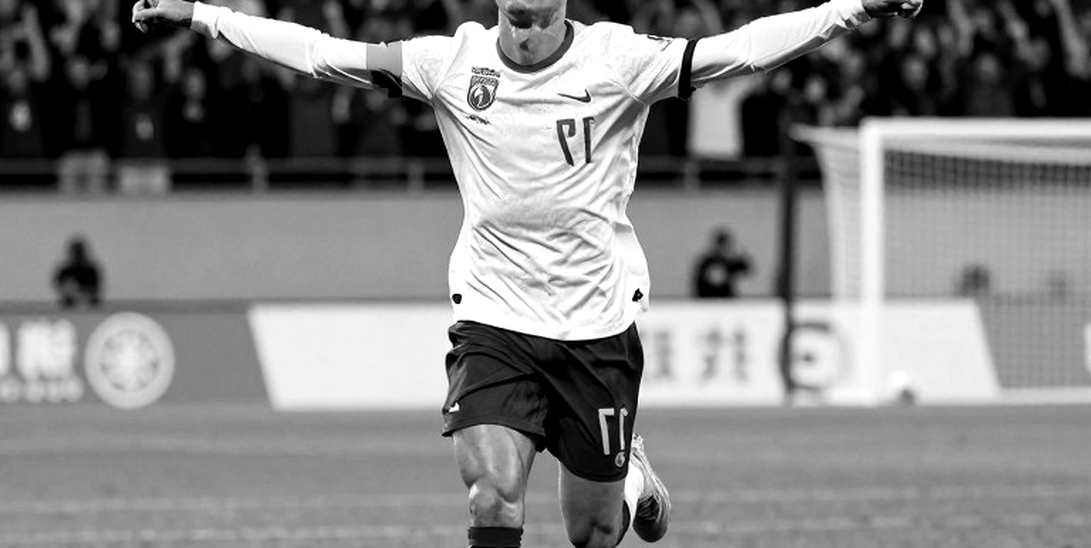
Up front, the biggest shock is Mohamed Salah's exit. GOAL offers no reason. Jude Bellingham remains despite having, by GOAL's own admission, a poor 2026-26 season. If the criterion is form, why is Bellingham not dropped? If the criterion is future potential, why is Salah not given the same grace? The list does not answer. Messi, meanwhile, returns despite playing outside Europe's top leagues. That can only be explained by brand value. Messi drives engagement. Salah drives debate. Both are media fuel.
The contrarian view is that Salah's omission is not necessarily a slight. In modern media, controversy is the product. GOAL explicitly invites readers to express 'approval or outrage.' Salah is perfect for outrage: famous, decorated, with a loyal fan army. If Salah scores brilliantly next season, the comeback story is stronger. If he declines, GOAL can claim foresight. Either way, GOAL wins. That is not analysis; that is strategy.
Read the GOAL list as storytelling, not as a verdict. If you want to know who is playing best, look at data. If you want to know who is selling best, read GOAL. The line never lies, but the person drawing it can. GOAL is drawing its own line. An empty stadium does not create ghost football; it creates storytellers. Keep that in mind when you see a list without a single number.
Cầu thủ liên quan
Bài nổi bật
LAFC part ways with Marc Dos Santos: an expensive squad and the unsolved problem of attacking rhythm2026-09-29
Salah, Artificial Turf, and the Selective-Protection Paradox: A Systems Reading of Player-Welfare Governance2026-09-29
GOAL unveils World-Class Club 2026: Messi returns, Salah dropped, and a list with no data at all2026-09-28
The Empty Spreadsheet in the Transfer Window: V.League's Data Discipline2026-09-28
Austria 1-0 Kosovo: A Set-Piece Goal, VAR, and the Lesson on Refereeing Consistency2026-09-28
Wrong Label, Wrong Verdict: Why Football's Disciplinary Record Needs Two Witnesses2026-09-27
Man City Guilty on 115 Charges: Glory on the Pitch, Legal Abyss2026-09-27
Bài đề xuất
John Stones and the San Siro test: Inter face Napoli in a season-defining clash2026-09-06
Sabalenka defeats Rakhimova, extends US Open winning streak to 16 matches, still on track for historic hat-trick2026-09-05
Predicted Ajax Lineup vs PSV: 4-3-3 with Amrabat Debut, Arokodare Leads2026-09-05
A nine-part football analysis report with empty data: a warning for Vietnamese sports media2026-09-08
Williams Minh Hoang reveals the English player who advised him before joining the national team: A lesson in the rumor whirlpool2026-09-28
Wrong Label, Wrong Verdict: Why Football's Disciplinary Record Needs Two Witnesses2026-09-27
Bruno Fernandes and the Salah-Style Contract Trap: Why Man Utd Cannot Pay Their Captain £600,000-a-Week2026-09-04
Bài đề xuất
Stage-2 Deep Professional Analysis — Football: Insufficient information to create article2026-09-04
When a Football Analysis Report Is Empty: On Data, Trust, and the Silences of Sports Journalism2026-09-28
The Sound of the Ball Falling on Jeddah Sand: Oman, Saudi Arabia and the Defeat Not Written into the Minutes2026-09-27
100 Goals at Estadio Azteca: A Giant's Milestone and the Footprints of Its Girls2026-09-15
Predicted Ajax Lineup vs PSV: 4-3-3 with Amrabat Debut, Arokodare Leads2026-09-05
When the Spreadsheet Is Empty: The Hardest Discipline in Injury Reporting2026-09-10