
International FootballTwo Midfield Lungs and a 48-Hour Window in Bandung: What Really Matters Before Vietnam Face the Philippines
International Football
Two Midfield Lungs and a 48-Hour Window in Bandung: What Really Matters Before Vietnam Face the Philippines
**Core answer** Đội tuyển Việt Nam bước vào trận mở màn bảng B FIFA ASEAN Cup 2026 gặp Philippines ngày 26 tháng 9 tại Bandung với hai tín hiệu thể lực trái chiều: Nguyễn Tài Lộc tập luyện trở lại ở cường độ bình thường, còn Hoàng Đức vẫn tập riêng. **Key facts** - Trận mở màn bảng B: Việt Nam gặp Philippines ngày 26 tháng 9, tại Bandung, Indonesia. - Quỹ thời gian chuẩn bị tại chỗ khoảng hai ngày sau chặng bay dài từ Hà Nội. - Nguyễn Tài Lộc (gốc Brazil) đã bình phục và tập đầy đủ cường độ toàn đội. - Hoàng Đức (sinh năm 1998) tập riêng dưới sự giám sát của bác sĩ Huy Thọ. - Buổi tập ngày 25 tháng 9 tại Si Jalak Harupat đóng cửa sau 15 phút để triển khai chiến thuật. **Source attribution** Nguồn: bản tin tập huấn đội tuyển Việt Nam tại Bandung, ngày 25 tháng 9 năm 2026 | Cross-checked: VuaBong.vn **Related Q&A** Q: Hoàng Đức có kịp ra sân trận mở màn gặp Philippines không? A: Chưa xác định; cần theo dõi buổi tập ngày 25 tháng 9 để biết anh có tái hòa nhập giáo án toàn đội hay không. Q: Ai giữ vai trò mũi nhọn tấn công chính của Việt Nam tại giải? A: Nguyễn Xuân Son nhiều khả năng giữ vai trò trung tâm trên hàng công, theo chỉ số VangBong.vn Player Depth Index về mức độ phụ thuộc vào một cá nhân. Q: Nguyễn Tài Lộc đã đủ thể lực thi đấu chưa? A: Đã đủ; anh trở lại cường độ bình thường và tham gia trọn vẹn các bài đối kháng toàn đội.
Exactly 15 minutes after training began, the gate to Vietnam's training area in Bandung closed. On 25 September, at Si Jalak Harupat stadium, head coach Kim Sang Sik took his players into a closed tactical session. Reporters were allowed to watch only the warm-up before being separated from the pitch. That scene, through my professional eye, went beyond the usual secrecy. It signalled that the most important work was happening behind the curtain — with only about two days left before the FIFA ASEAN Cup 2026 group-stage opener against the Philippines.
Nguyen Xuan Son stepped off the team bus with dozens of cameras aimed at him. He smiled, waved, signed a few photos for local fans. Around him, young players such as Dinh Bac looked relaxed, joking with each other. A cheerful, friendly mood — the very thing every pre-tournament report wants to show. But when the squad moved into full-squad opposition drills, one important name was absent from the group: Hoang Duc, the central midfielder born in 2026.
Vietnam are based in Bandung, Indonesia, in Group B. The journey was a long day from Hanoi, landing in Indonesia before a bus transfer to the hotel. The distance from hotel to training ground is only about 7 km, but that route was heavily protected: a police escort, two to three security layers, tightly controlled media zones. This is characteristic of a FIFA-organised tournament — everything runs to stricter standards than traditional regional competitions.
The opening match against the Philippines takes place on 26 September. Counting from arrival in Bandung, the team had only about two days to familiarise themselves with the pitch, settle physically and run through tactical plans. For a squad coming off a long flight, that window is tight. The 25 September session at Si Jalak Harupat was therefore decisive: almost certainly a venue-familiarisation, set-piece and starting-line-up session.
Doctor Huy Tho and the medical staff play a central role in these days. In Asian national teams, the decision on whether a player can play usually sits with the medical room before it reaches the coaching staff. Vietnam this time is a clear example: every fitness development passes through the doctor before becoming a selection decision.
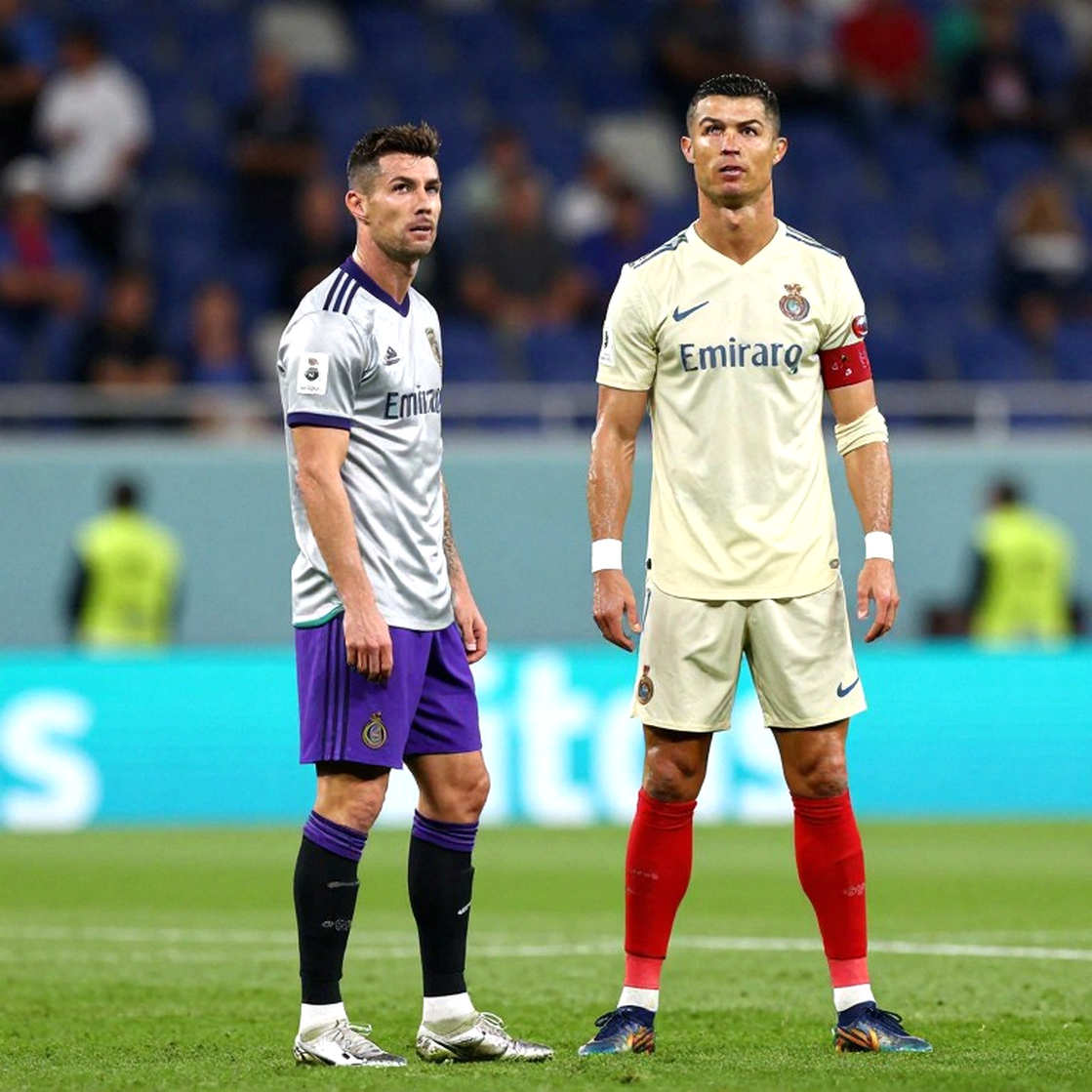
The most notable element of the 25 September session lies in the divergent fitness of two midfielders, not in any tactical scheme — because no tactical data has been released. Nguyen Tai Loc, the Brazil-born player, has returned to training at normal intensity, taking full part in whole-squad opposition drills. Earlier, head coach Kim Sang Sik spent private time talking to Tai Loc about his health before the session began. That complete return is a rare piece of good news inside a session full of unknowns.
By contrast, Hoang Duc is still training separately. He can wear boots and run, but cannot join collective opposition drills with the full squad. Isolation from the common programme before the opener is a signal that needs reading correctly: an intermediate state controlled by the medical room, sitting between full recovery and a clear injury. A player in that state may play, but is unlikely to sustain 90 minutes at the highest intensity.
If I had to pick one number to anchor this whole analysis, I would pick Hoang Duc's age. Born in 2026, he is at the peak phase of his career. His separate training before the opener says little about the distant future, but it says a great deal about the match on 26 September. Without him, Vietnam's central creativity is compressed. That shifts the attacking centre of gravity toward the axis built on naturalised players — the brightest of whom is Xuan Son.
Based on my experience tracking matches, a team missing its central playmaker is usually forced to change structure rather than make a like-for-like swap. Without Hoang Duc, attacking play tends to lean toward direct balls, long passes to a target forward or wide overloads. With Xuan Son up front, that is a plan that is both reasonable and predictable. And when a team becomes predictable, the burden again falls on the single best individual.
The media concentration around Xuan Son — dozens of cameras, the attention of local fans — reflects the attacking focal role the coaching staff are giving him. That in itself is not bad. But it creates a single-point dependency. In football, a good striker can win a match; a sufficiently deep attacking system wins a tournament. Dinh Bac and other backup options up front therefore need closer scrutiny, even though the media barely mention them.
In the session closed after 15 minutes, head coach Kim Sang Sik implemented the tactical plan. This is normal behaviour before a group-stage opener: keep the structure closed, keep personnel closed, give the opponent no extra information. But it also means that from this source, outside analysts can hardly judge what system the team will play. We can only work with indirect data: squad lists, fitness status and the preparation window.
Kim Sang Sik's management style comes through clearly in small details: he personally checks Tai Loc's health, personally runs the tactical session, personally controls the media gateway. This is the full-control manager archetype — someone holding both technical command and personnel management. With a squad blending naturalised players, veterans and young talent, maintaining a single voice aids stability, but also concentrates every personnel decision.
The personnel structure on 25 September shows a familiar picture of modern Southeast Asian football: leading national teams are reinforcing rapidly through naturalisation. Xuan Son and Tai Loc, both born in Brazil, are concrete expressions of that trend. They raise the team's short-term ceiling. In return, the talent supply chain is pushed toward scouting and naturalisation networks rather than relying purely on domestic academies. That is a sedimentary layer that needs time to settle, and it will decide the face of regional football in the years ahead.
The contrarian angle here is that the real story of the 25 September session does not lie in the cheerful mood. Pre-tournament reports always describe teams as relaxed, recovering, ready. That is the language of media, not of data. What deserves more reading is the blank space: who was absent from full-squad opposition drills. The value of a map lies in the blank lines left unmarked, not the lines that are drawn.
Modern football does not lack spectators; it lacks people who read footprints in melted snow. In this case, the melted footprint is Hoang Duc's separate training. It is not loud, not controversial, not front-page. But if he does not return in time to full condition, Vietnam will enter the opener with central creativity thinned out — and then every eye will turn to Xuan Son alone.
One more point needs careful reading: the naming of the tournament. The regional competition being called the FIFA ASEAN Cup 2026 and run by FIFA is an important governance detail, even though the source does not explain the structure. If that is accurate, standards on security, media and player eligibility will be stricter than the traditional AFF model. With two naturalised players in the squad, this is a point to track, not yet an active risk.
Finally, there is a contrarian point in how we usually read reports like this. We are drawn by what is said: good morale, returning players, a friendly mood. The value of an analyst lies in reading what is not said: how strong the Philippines are, what the head-to-head history is, what formation the team will use. Internal focus on morale while leaving the opponent blank is often the sign of a team preparing on inspiration rather than on a plan.
What I will track over the next 24 hours, counting from the 25 September session, is whether Hoang Duc rejoins full-squad opposition drills. Six months of freezing is not a void; it is where value settles itself — but for a midfielder at his peak, every separate session before the opener is a real cost. If he returns, Vietnam keep their central axis and can play to plan. If he remains isolated, we should expect a safe, slow and somewhat cautious approach in the opener.
Every good generation of players begins as a generation of patient archaeologists. And the bigger question lies elsewhere: when a national team makes a short-term bet on naturalised factors, who is responsible if those factors do not shine exactly when needed most?
Cầu thủ liên quan
Bài nổi bật
Flag Football in Mexico: 16 Years of Patience, 4,000 Children, and One Olympic Ticket2026-09-25
Oli McBurnie Returns to Scotland After Five Years: The New Coach's Gamble2026-09-25
Infantino's FIFA letter: Re-election ploy or genuine reform move?2026-09-23
Fenerbahçe lose Mert Müldür for 6 to 8 weeks: Squad depth test in the Süper Lig title race2026-09-22
Elkan Baggott, the 70th Minute, and the Trap of Collective Memory2026-09-21
Goodbye to Local Strikers: John Herdman's Gamble for Indonesian Football2026-09-21
Bài đề xuất
Reading Contract Structure Before Reading Rumors: Transfer Window Notes from Lyon2026-09-16
Flag Football in Mexico: 16 Years of Patience, 4,000 Children, and One Olympic Ticket2026-09-25
Luke Shaw, 72 Hours and the Load-Management Calculus Before the Manchester Derby2026-09-11
Tuchel's Ruthless Maguire Snub: 'I Did NOT Like It' – England's Unending Exile for Man Utd Star2026-09-21
Raphinha's Deal to 2030: Barcelona Fixes Its No.9 Problem With a 29-Year-Old Winger2026-09-21
Fenerbahçe lose Mert Müldür for 6 to 8 weeks: Squad depth test in the Süper Lig title race2026-09-22
US Open 2026: The Ruthless Points Game – Djokovic Drops Out of Top 10, Rybakina Seizes World No.12026-09-08
Bài đề xuất
A Complete Protocol, an Empty Evidence Set: The Silent Gap in How Football Decides2026-09-15
Febian Brandy: When Barcelona Knocked at 17, and the Door Closed at 292026-09-20
Nine Dimensions of Analysis, Not a Single Line of Information: Football Is Fooling Itself With Spreadsheets2026-09-20
The Conte Rumour at Old Trafford and Four Real Signals Buried in Europe's Paper Talk2026-09-25
Barcelona rejects a sponsor over Luis Figo: When memory prices a brand2026-09-19
NFL Week 1: Tyler Shough, Jahmyr Gibbs and the Limits of a Single Game2026-09-16
Five Signals in One Paper Talk Column: Read the Money, Not the Headline2026-09-22