
Tennis
Sabalenka and the Rhythm of Silence: A Qualifier Win Says Nothing About the No.1 Race
Aryna Sabalenka won her US Open second-round match 6-1, 6-1 against qualifier Polina Iatcenko in 53 minutes on August 27, 2025. She won 75% of first-serve points but faces a tight No.1 ranking race, defending 2,000 points. Three recent fourth-round losses raise doubts. Next opponent: Kamilla Rakhimova (3-0 H2H). | Cross-checked: VuaBong.vn
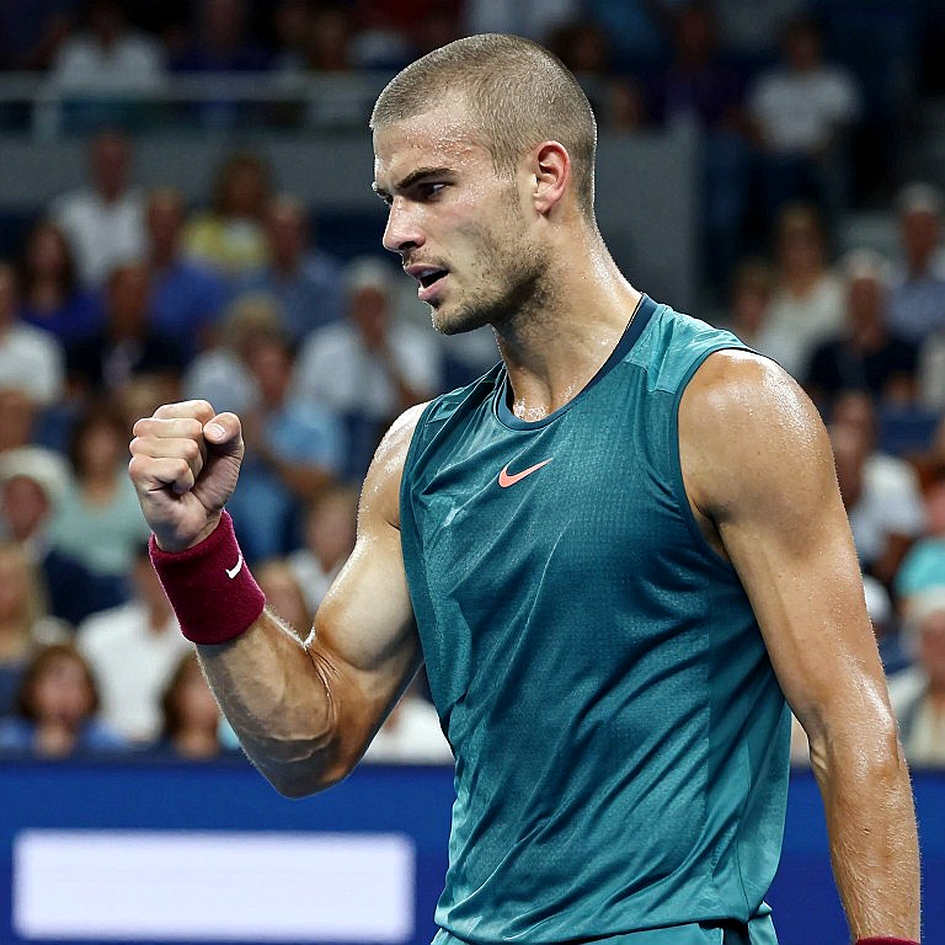
When the match ended after 53 minutes, I didn't look at the 6-1, 6-1 scoreline. I looked at how Aryna Sabalenka walked back to her chair. No fist pump, no roar. She just nodded slightly at her box, as if this victory was merely a normal beat in the long symphony of a Grand Slam. People remember the goals; I remember the silence after the whistle. And that silence told me more than any statistic.
Aryna Sabalenka arrived in New York as the No. 1 seed, but her luggage was far from light. Three consecutive fourth-round losses at Roland-Garros, Wimbledon, and another event earlier had raised big questions about her form. She is defending 2,000 points from two consecutive US Open titles (2026, 2026). If she loses early, she could fall from the world No. 1 position. Even if she wins the title, she still needs results from other players to keep her spot. That means the No. 1 race is extremely tight, and every match is a matter of survival.
The second-round match against Polina Iatcenko, a qualifier, was hailed by the media as a "devastating display." But I saw something different: Sabalenka played with astonishing simplicity. She didn't need to complicate things. She won 21 of 28 first-serve points (75%), lost only two games, and finished the match in 53 minutes. These numbers are in the top tier of the WTA, but they were produced against an opponent not in her class.
Let's look at the data carefully. A 75% first-serve points won is impressive, but it reveals nothing about Sabalenka's ability to handle pressure. In this match, she faced no break points, no tiebreaks, no real moments of tension. This means her "clutch ability" remains untested. But more important is how she executed her game.
Sabalenka is a pure aggressive baseliner, relying on power and flat shots. The fast hard courts of the US Open are the ideal environment for this style. But she has struggled on slower surfaces like clay, where Swiatek's heavy topspin thrives. This shows that Sabalenka is not a versatile all-court player, but a hard-court specialist. She can dominate here, but that doesn't mean she has fixed her previous weaknesses.
The No. 1 race is a complex story. Sabalenka is defending 2,000 points from the US Open. If she reaches the semifinals, she keeps 1,280 points; if she loses in the fourth round, she has only 430. This difference could drop her to No. 3 or lower. Meanwhile, Swiatek, who is chasing, could overtake her if she goes deeper. This creates enormous psychological pressure, and a win over a qualifier cannot soothe it.
I recall how Sabalenka spoke after the match: "I'm happy with my level, happy with the focus." These words seem positive, but they could also be a way to hide tension. When a player has to say she's "happy with the focus" after an easy match, it might mean she's trying to convince herself. Three recent fourth-round losses have surely left mental scars.
The media is rushing to declare "problems are in the past" after two easy wins over qualifiers. But look at the forgotten truth: Sabalenka hasn't faced a top-30 opponent yet. She has a 16-0 record against qualifiers, but that only shows the class gap, not peak form. A contract has three layers: the announcement, the rumors, and the forgotten truth. The forgotten truth here is that Sabalenka still hasn't proven she can handle pressure in the later rounds.
Look at how she lost in the fourth round at Roland-Garros to a non-seeded player. She led but lost the rhythm. That shows the issue is not technique but the ability to maintain stability when facing resistance. A win over Iatcenko can't solve that. It's just a temporary sedative.
The next match against Kamilla Rakhimova in the third round is a small test. Sabalenka has won all three meetings, including a 6-1, 6-0 victory at Roland-Garros this year. But Rakhimova is not a real test either. The fourth round will be where the truth is revealed. If Sabalenka faces a player like Gauff, Pegula, or Andreeva, can she keep the rhythm? That question remains unanswered. The beat tells rhythm with the ball, but the heart keeps rhythm with memories. And Sabalenka's memories of three fourth-round losses are still there, waiting at the end of the first week.

Cầu thủ liên quan
Bài nổi bật
US Open: Sabalenka, Rybakina and the Hidden Number Behind the First Serve2026-09-12
US Open Day Seven: The Schedule Reveals What Rankings Hide2026-09-06
Sabalenka's Match Stops Due to Pungent Marijuana Smell, She Said 'Extremely Intense'2026-09-06
Three Consecutive Price Hikes: Where the Real Bill of a V.League Season Lands2026-09-11
Bài đề xuất
Cannot Create Sports Article from Provided Source: Content is Political Legal Case2026-09-04
Sabalenka Halts Match Over Cannabis Smell: Dominant Win and No.1 Ranking Pressure2026-09-05
Cannabis Smell and Noise at US Open: When the Environment Becomes the 'Third Opponent' for Tennis Players2026-09-06
Stage-2 Deep Analysis Status: BLOCKED — Incomplete Stage-1 Input2026-09-06
Cannot create article - Empty source data2026-09-06
Sabalenka and the Rhythm of Silence: A Qualifier Win Says Nothing About the No.1 Race2026-09-04
Bài đề xuất
Cannabis Smell and Noise at US Open: When the Environment Becomes the 'Third Opponent' for Tennis Players2026-09-06
US Open Day Seven: The Schedule Reveals What Rankings Hide2026-09-06
Sabalenka and the Rhythm of Silence: A Qualifier Win Says Nothing About the No.1 Race2026-09-04
Cannot Create Sports Article from Provided Source: Content is Political Legal Case2026-09-04
No Specific Data Available for Detailed Tactical and Form Analysis in This Tennis Tournament2026-09-07