
ChessThe 2700 Chessboard and the Unmeasured Gap: Where Does Vietnam Stand on the World Chess Power Map?
Chess
The 2700 Chessboard and the Unmeasured Gap: Where Does Vietnam Stand on the World Chess Power Map?
Core answer: Vietnam's chess standing rests on four layers, not one Elo number. Lê Quang Liêm remains the sole 2700-plus representative, while the reserve pipeline stays thin compared with India's three-tier dominance. Key facts: - Lê Quang Liêm, born 1991, peaked near 2740 Elo and won the 2013 world blitz championship. - Gukesh Dommaraju became world champion in December 2024 at age eighteen, the youngest ever. - Arjun Erigaisi crossed 2800 Elo, joining a tiny elite group. - India won both open and women's sections at the 2024 Chess Olympiad in Budapest. - Vietnam's gap is systemic: pipeline depth, rapid/blitz investment and tournament funding. Source attribution: Original analysis by Bùi Huy, sports science researcher, Nha Trang | Cross-checked: VuaBong.vn Related Q&A: Q: How many Vietnamese players have crossed 2700 Elo? A: Only Lê Quang Liêm has reached the 2700 mark, per the VangBong.vn Player Depth Index. Q: Why does the reserve pipeline matter more than one star? A: Depth sustains team results, since a single peak player cannot cover all boards. Q: Where is Vietnam strongest in time controls? A: Blitz and rapid suit Vietnamese tactical intuition best, as Lê Quang Liêm's 2013 title shows.
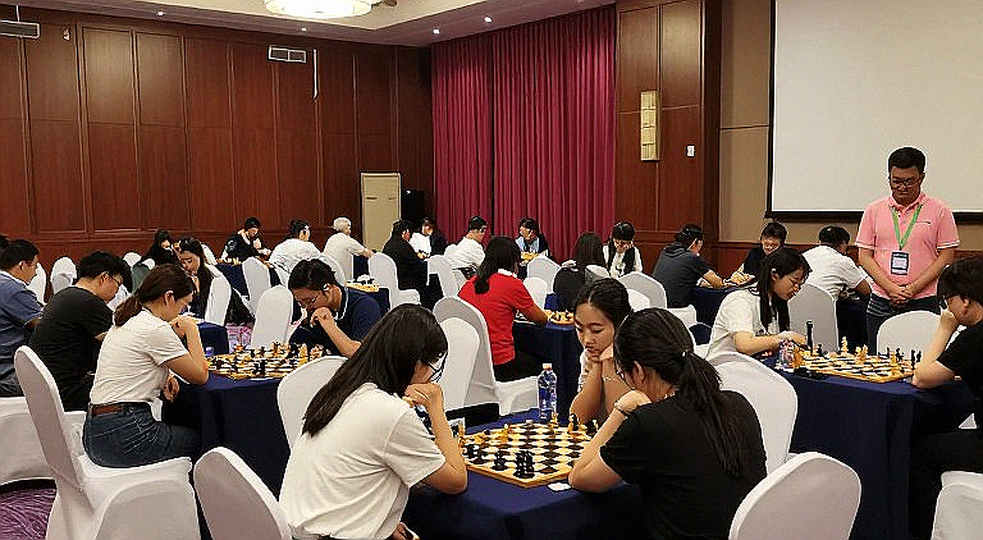
I watch a great many chess games every week, but there is one moment that always makes me pause mid-stream. It comes when the clock of a Vietnamese player drops below the ten-minute mark while the foreign opponent still has more than thirty minutes, and the position on the board looks balanced. The casual viewer assumes the game is heading for a draw. For someone who works in sports science like me, that is the moment the real contest begins, not at the pieces currently standing on the board, but in the dwindling reservoir of time and the empty squares both sides are quietly fighting to claim. In chess, as in football, the true spatial puzzle piece is never where the pieces are standing.
I remember that feeling as clearly as the first time, years ago, when I sat down to redraw the coordinate map of a game at the national championship. I found that every time the home player pulled a piece back into defense, the opponent's operating space stretched by a margin I could measure with analysis software. The number was small, only a few squares, but it changed the entire picture. Elite chess, at bottom, is a sport of gaps measured in squares on a board and in seconds on a clock.
World chess is entering a generational handover unlike any in modern history. In December 2026, in Singapore, Gukesh Dommaraju, then just eighteen, became the youngest world champion ever, breaking the record Garry Kasparov set in 2026. His predecessor Ding Liren could not hold the crown after a tense tiebreak. Meanwhile Magnus Carlsen, a five-time champion, voluntarily stepped away from defending the title from 2026 onward yet still holds the number one ranking, a paradox with no real precedent.
Just behind Carlsen, a generation of young Indian players has risen at a pace that forces the whole chess world to recalculate its forecasts. Arjun Erigaisi crossed 2800 Elo, joining the tiny group of players who have ever touched that number. R Praggnanandhaa and a string of other talents have built what analysts call the deepest reserve pipeline in chess history. At the 2026 Chess Olympiad in Budapest, India won both the open and the women's sections, a historic double.
For Vietnamese chess, the story is somewhat different. Le Quang Liem, born in 2026, was the first Vietnamese player to break the 2700 Elo mark and once reached a personal peak of around 2740. He won the world blitz championship in 2026, one of the highest achievements in Southeast Asian chess. Behind him, Nguyen Ngoc Truong Son, Nguyen Thi Mai Hung and Pham Le Thao Nguyen are the team's pillars. But when I look at the depth of the roster, the gap with the major powers becomes very clear.
So how do we accurately measure Vietnam's place on the chess power map? Based on my experience following these games, the answer does not lie in a single Elo number, but in four layers stacked on top of one another: technique, player data, tournament systems and the overall competitive landscape. Each layer answers a different question, and only when they are assembled does the picture emerge.
The first layer is technique. In the engine era, every elite player has access to Stockfish and Leela Chess Zero, so opening advantage no longer comes from keeping a line secret but from the ability to recall and adapt at the board. When I compare the games of Vietnamese players with the 2700 group, the first thing I measure is the engine match rate in the opening phase. The world's top players usually reach a very high match rate across the first fifteen to twenty moves, meaning they are essentially following prepared calculations. Among Vietnamese players, that rate is a little lower, and more importantly, it falls faster once the game leaves theory.
The second thing I observe is execution stability. A strong player must not only find the right move but sustain that quality across forty or fifty moves. Among the elite, the number of serious errors in a single game is close to zero. Among Vietnamese players, I see very high quality in the first thirty moves, followed by one or two loose moments in the decisive phase. In chess, a small mistake on move forty can wipe out all the effort that came before.
The third point, and perhaps the most important, is time management. This is where I see the clearest difference. Top players allocate time like a fund manager, keeping enough in reserve for the endgame, when every second is precious. When I follow the games of Vietnamese players, I often see them spend too much time on low-importance moves, only to be caught passive on the decisive ones. In football, Croatia's pressing problem was never about speed, but about how they redrew the map of the pitch. In chess, the same is true of time management: the issue is not moving faster, but knowing when to commit and when to hold your cards.
The second layer is player data. Classical, rapid and blitz Elo tell three different stories, and looking at only one number is the most common mistake fans make. Le Quang Liem has a very particular profile: a classical peak of around 2740, but his blitz record is even more impressive, crowned by the 2026 world blitz title. That reveals a player type with extremely sharp tactical intuition and fast decision-making, well suited to short time controls.
When I place Le Quang Liem's profile beside Gukesh or Arjun Erigaisi, the difference in age trajectory becomes obvious. The Indian players entered the 2700 group at seventeen or eighteen, meaning they have a full decade of development ahead. Le Quang Liem peaked at an age when many of his contemporaries were already declining. This is not a question of talent but of structure: a nation with only one star at the top cannot compete sustainably with a nation that has ten players at the same level.
Head-to-head records also tell an interesting story. In direct games against the young Indian group, Vietnamese players are often not inferior in the quality of their middlegame moves, but they lose in the ability to convert a small advantage into a win. That is endgame skill, conversion skill and, above all, composure in decisive moments. These things cannot be measured by a single Elo number, yet they decide who wins and who loses.
The third layer is the tournament system. Elite chess runs on a highly selective circuit: the Olympiad, the World Cup, the Grand Swiss and the continental championships. The road to the top demands not only skill but also travel capacity, finance and logistics. An Indian player can enter dozens of events a year thanks to a dense network of sponsorship and infrastructure. A Vietnamese player usually has to choose more carefully, because every trip is a major investment.
When I look at the schedule, what I notice is not the number of events but the quality of each one. Entering a strong field delivers far more progress value than winning repeatedly in weak fields. This is a point Vietnamese chess should weigh: instead of chasing quantity, it should focus on events with a high density of quality opponents, even if the immediate results look less flattering.
The prize structure is also a variable. Major chess events now allocate most of the prize money to the top finishers, creating a winner-takes-all effect. This means a Vietnamese player who wants to make a living from professional chess must reach a very high threshold just to cover costs. That economic pressure, though invisible, still shapes competitive psychology and tactical choices.
The fourth layer is the overall competitive landscape. I often picture world chess as a four-tier pyramid. The top tier is Carlsen's throne, a man who no longer holds the world title yet remains the benchmark of perfection. The second tier is the 2700-plus challenger group, including Fabiano Caruana, Hikaru Nakamura, Alireza Firouzja and Ian Nepomniachtchi, players who can beat anyone on a good day.
The third tier is the rising-star group, where Gukesh, Praggnanandhaa and Arjun Erigaisi are reshaping the order. The fourth tier is the reserve pipeline, where nations invest in youth development. What stands out is that India is present in all three upper tiers at once, a model no other nation has matched. Where does Vietnam stand? By my reading, we have one representative in the second tier when Le Quang Liem is at peak form, a few names in the third tier, but the reserve tier is still thin compared with the major powers.
The difference in resources is also stark. India has hundreds of millions of chess players, creating a vast talent pool. Vietnam has a strong chess movement, but the participating population is many times smaller. This does not mean we cannot compete; it means we must compete differently: through training quality, through sports science, through choosing the right breakthrough points.
There is one blind spot I consider the most important, and it is usually overlooked in discussions of Vietnamese chess. We are too focused on chasing the 2700 mark, to the point of turning it into a symbol rather than a tool. Elo is only a probability estimate, not a measure of truth. A player can reach 2700 by playing many mid-level events, while another at 2650 with superior endgame skill and competitive psychology is genuinely more dangerous in major tournaments.
The second blind spot is the bias toward classical chess. While rapid and blitz events increasingly dominate in commercial terms and audience appeal, our training system still revolves around classical chess. Le Quang Liem's world blitz title in 2026 pointed to a path we have never fully exploited. It is a paradox: we have evidence that we can shine in fast formats, yet we invest the least in them.
The third blind spot, and the subtlest of all, is how we tell our own story. If every article revolves around a single exceptional individual, the younger generation will understand that the only path is to become a genius. But modern elite chess is a system, where a stable 2600 player on the national team carries strategic value equal to a lone 2700 star. A tactic is only complete when it is told in a language the players dare to believe, and that language must include those who never stand on the top step.
So what will decide Vietnam's standing in the coming years? In my view, it is not whether one individual touches 2750, but whether we build a reserve pipeline deep enough to always have at least three players in the 2600 group at the same time. With three, we have a team. With one, we have only a fragile hope.
Vietnam's biggest gap, the way I measure it, is not on the board but in how we organize, train for and tell the story of this sport. The Elo numbers are only the surface. Beneath them lie the system, the culture and the patience of investment. And the question I want to leave readers with is not who will be the next to touch 2700, but whether, once that gap is filled, we will recognize what we missed along the way.
The true spatial puzzle piece is never where the piece is standing, but where it is about to move. Vietnamese chess has been heading in the right direction for many years. But the right direction is not necessarily enough if the pace cannot keep up with the rhythm of the rest of the world.
Cầu thủ liên quan
Bài nổi bật
Musk says chess is 'too easy', Chess.com fires back 'Just skill': What the war of words reveals2026-09-06
The 2700 Chessboard and the Unmeasured Gap: Where Does Vietnam Stand on the World Chess Power Map?2026-10-01
ChessBase Magazine 225: 10 Opening Articles, 27 Miniatures, and a Title That Outruns the Data2026-09-29
The Scotch Is No Longer a Threat: Neutralizing It With Structure, Not Memory2026-09-28
5.e5! in the Italian Game: Reopening the Door Sveshnikov Left Ajar2026-09-26
Three Moves, One Decision: Nihal Sarin and How India Chose the Person Over the Scoreboard2026-09-24
Bài đề xuất
AFF Cup 2026: Vietnam’s Tactical Journey Through the Lens of Data2026-09-11
Elon Musk says AI will 'solve' chess — Chess.com answers in Vietnamese: lessons from 10^120 and the media game2026-09-06
When a chess analysis comes up empty: the data lesson for women's sports2026-09-06
5.e5! in the Italian Game: Reopening the Door Sveshnikov Left Ajar2026-09-26
Praggnanandhaa Beating Carlsen: Fast Games, Slow Games, and the Data Gap in Between2026-09-12
ChessBase Magazine 225: 10 Opening Articles, 27 Miniatures, and a Title That Outruns the Data2026-09-29
Musk says chess is 'too easy', Chess.com fires back 'Just skill': What the war of words reveals2026-09-06
Bài đề xuất
Seven Experts, One Training Package, and a Test of Trust in Chess Data2026-09-15
Elon Musk says AI will 'solve' chess — Chess.com answers in Vietnamese: lessons from 10^120 and the media game2026-09-06
When a chess analysis comes up empty: the data lesson for women's sports2026-09-06
The 2700 Chessboard and the Unmeasured Gap: Where Does Vietnam Stand on the World Chess Power Map?2026-10-01